


The Toennis Dissecting Scissor is engineered around a precise working principle. Its rounded blade tips can be introduced into a tissue plane and opened slightly to create space, allowing the surgeon to clearly visualize the structure being separated before any cutting occurs. This spreading action is particularly valuable when working near vessel sheaths, nerve coverings or membranes, where direct cutting without prior separation carries unnecessary risk.
Once the tissue plane has been opened, the fine cutting edges of the blades complete the dissection. These edges are designed to close with even pressure across their full length rather than concentrating force at a single point, which results in a cleaner cut and reduces drag on tissue that has not yet been separated. This staged approach is a key reason the instrument is favored in neurosurgical procedures, where the dura, arachnoid layers and small vascular sheaths all require careful and deliberate handling.
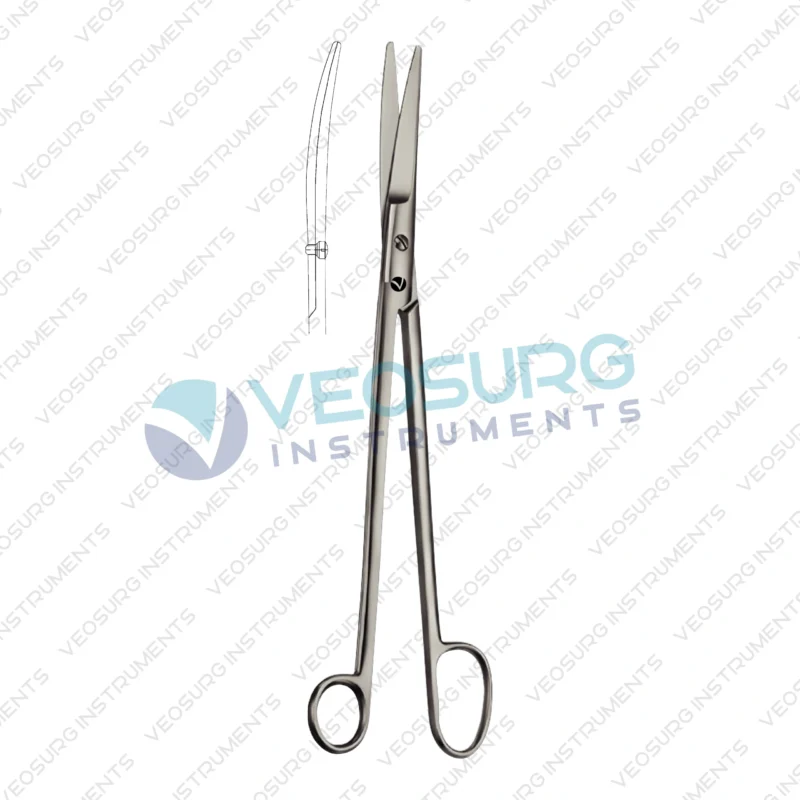
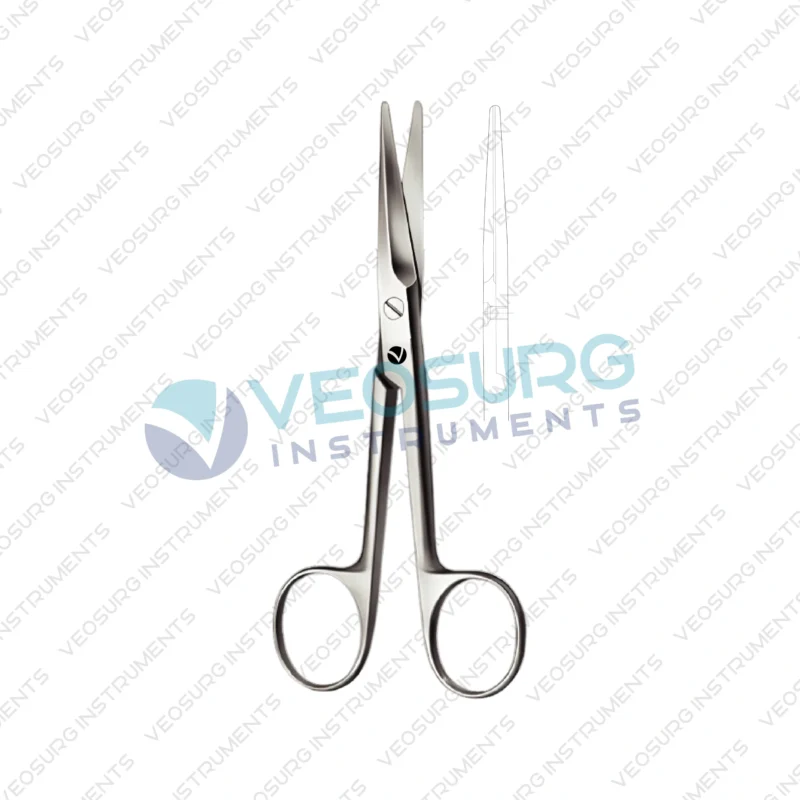
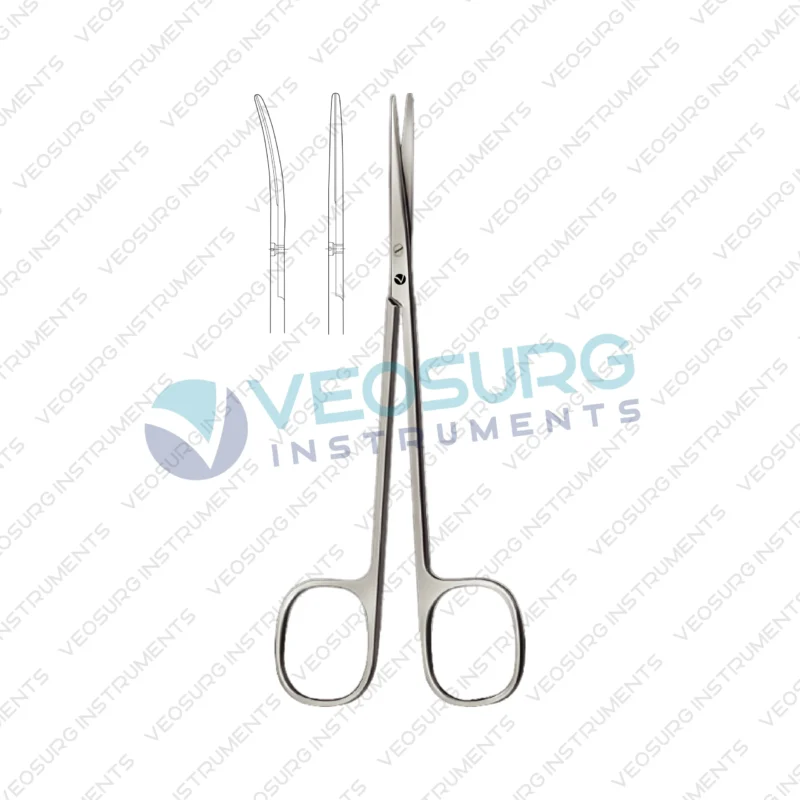
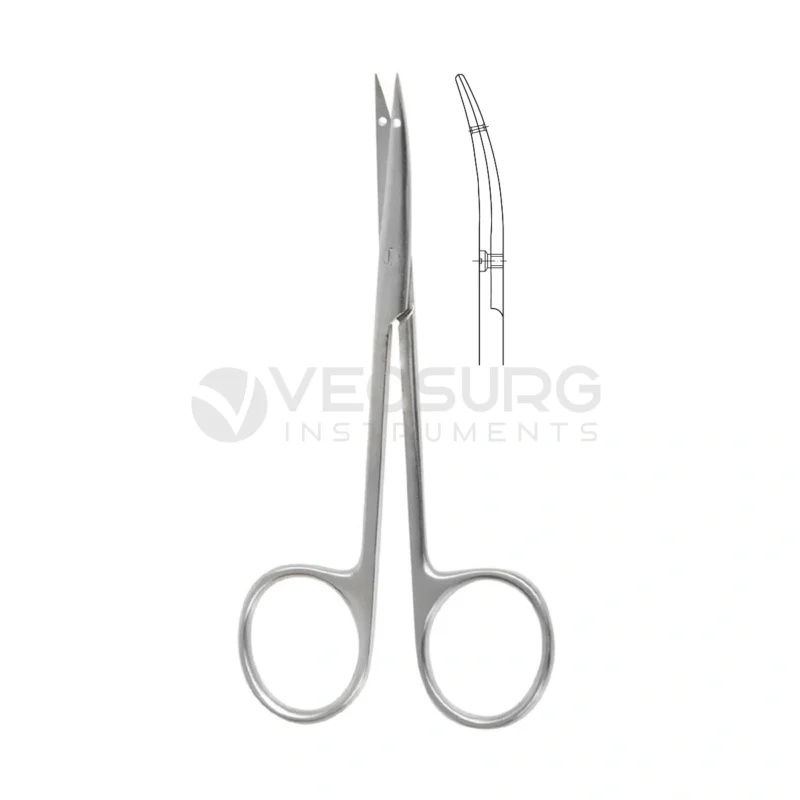
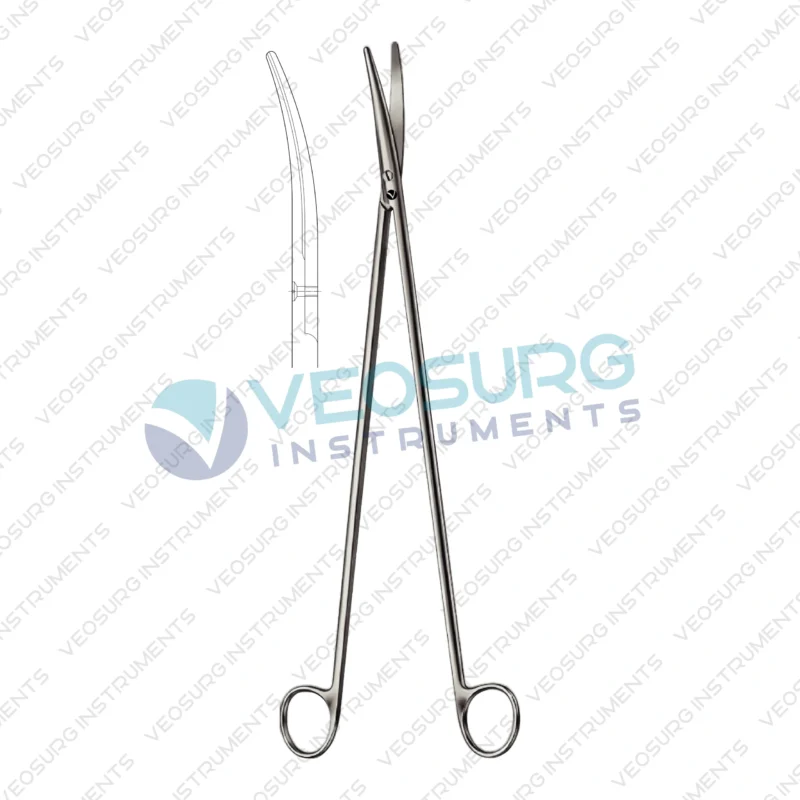
Two blade profiles are available to suit different surgical requirements. The straight configuration is suited to dissection near the surface, where the surgeon maintains a direct line of sight. The curved configuration follows the natural contour of deeper anatomical structures, offering improved visibility and reach without requiring an awkward hand position. A tungsten carbide variant is also available for surgeons seeking a harder and longer lasting cutting edge across repeated sterilization cycles.
The handle design prioritizes a light, balanced feel over unnecessary bulk. Over the course of a lengthy procedure, this difference in weight reduces strain on the surgeon’s hand and forearm. The ring handles are sized to accommodate a stable grip, whether the surgeon prefers a three finger or four finger hold.
The instrument is manufactured from surgical grade stainless steel and finished with a satin surface that minimizes glare under operating lights. It withstands repeated autoclave cycles without loss of sharpness, making it a reliable choice for sustained use across high volume surgical departments.

Reviews
There are no reviews yet.